Fifteen years ago, if your coworker said that you could create a website in under a minute, everyone would laugh at him. The AI revolution has made it possible, and it is getting better every day. However, there is a drawback: digital exclusion. Although artificial intelligence can create content easily, it lacks the human empathy and nuance to make it truly inclusive.
Artificial Intelligence (AI) is often praised for improving access through tools like speech-to-text and translation, among others. It can make technology more inclusive. But without careful oversight, AI can also create new accessibility barriers instead of removing them. Let us understand how AI-generated content is a hidden barrier for many individuals.
Common accessibility issues caused by AI-generated content?
AI can generate content in seconds. It sounds polished, structured, and professional, but accessibility is not about how content looks. It is about how it works for everyone. And this is where AI often falls short. AI is not your enemy; you just need to use it in a smarter way so that your content becomes accessible:
1. The Structural Problems
AI does not have the ability to understand the structure of the page. It might look perfect, but for a screen reader user, the content is a chaotic stream of words strung together. Therefore, you need to ensure that your content supports Assistive Technologies (AT) like screen readers.
Here is what you can do:
Manually check content before uploading it on CMS (Content Management System) rather than pasting the text directly from the chatbot.
When AI uses bold text instead of a heading tag, screen readers will not recognize it, and users will hear long, unbroken text without a context. Therefore, always review Headings to ensure that heading tags (H1 to H6) are used correctly.
2. The Bias of the Average User
AI systems are trained on majority patterns. AI optimizes for most of the users. Therefore, it rarely considers cases such as how a colorblind user perceives a generated graph or how a user with tremors interacts with a generated navigation menu. These scenarios are statistically “rare” in the training data; the AI ignores them, producing content that works for most but fails the people who need accommodation the most.
Furthermore, it might use alienating or confusing metaphors that may be technically apt for the sentence but come across as rude to users. For example, in a blog catering to blind users, the bot might make use of the “blind to the truth” metaphor. Although it might make sense in that specific paragraph, it is insensitive to people who are visually impaired or blind.
3. The Hallucination of Accessibility
A dangerous misconception is that AI can automatically “fix” accessibility. Many creators ask AI to “write alt text for this image” or “make this code accessible,” assuming the output is compliant.
It is usually not an accessible text or code, as the AI is still not experienced enough to understand these mistakes. AI does not validate compliance standards. It predicts what accessible content looks like. That is not the same as being compliant with WCAG or other standards.
Accessibility cannot be outsourced entirely to automation.
4. The Alt-Text Trap
Artificial intelligence has not evolved to understand and make changes according to the context. Therefore, when you use it to write alt text, it would either be vague or non-detailed alt text, or the image would not make sense.
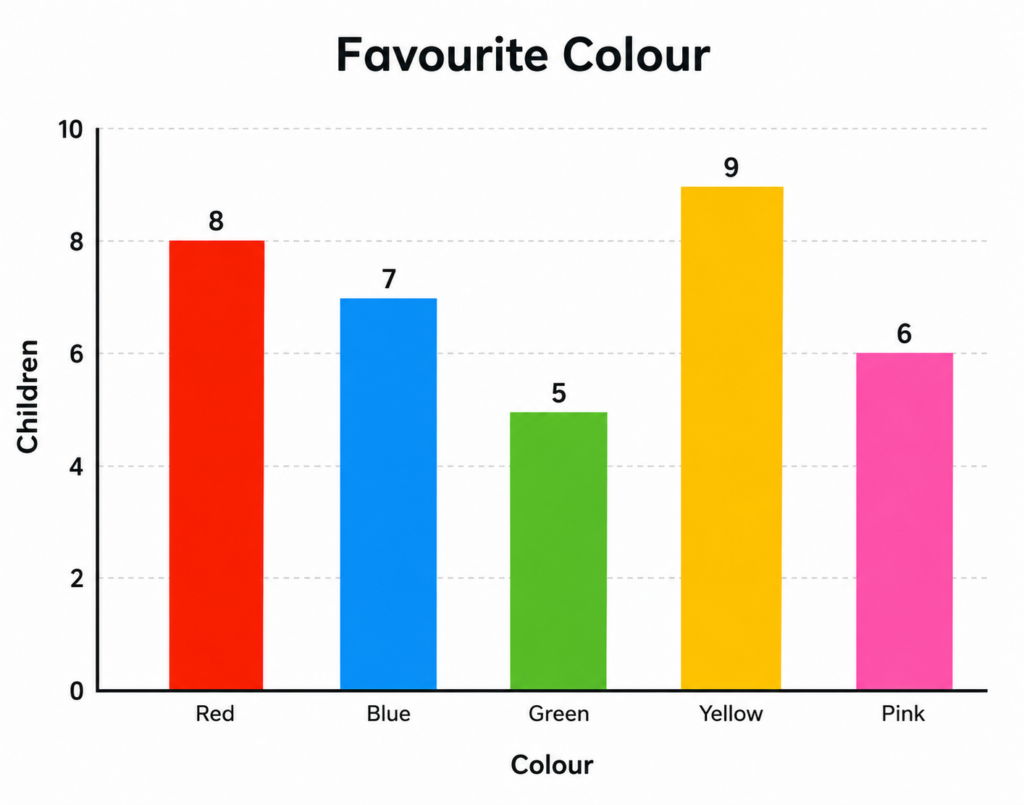
For example: The correct alt text for the image is “A bar chart featuring color preferences of children under ten with yellow being the most favored and green, the least liked.”
The bot might describe it as “a bar chart featuring color preference of children under 10”. Although this is technically correct, it is not conveying any information to users. Therefore, manually check alt-text when it is AI-generated. Context matters.
5. Cognitive Barriers and The Wall of Text
Accessibility is not just about blindness, it is also about how our brains process information. Users with cognitive disabilities, such as dyslexia, ADHD, or memory impairments, struggle with dense, complex, or unstructured text. AI models are notorious for producing exactly this kind of content.
Large Language Models (LLMs) are trained to be comprehensive; it often creates wordy sentences rather than being precise and to the point. This can cause mental fatigue in users with cognitive impairments, as they have to go through a sea of words just to understand a topic.
Here is how you can fix it:
- Treat the AI draft as a rough sketch. Try to naturally adjust the tone to guide your readers. We slow down when explaining complex topics and speed up for easy ones
- Cut the Fluff: Remove repetitive introductory phrases and prefer using active voice on your site.
- Check Reading Level: Use tools like Hemingway Editor to ensure the content is readable at a standard grade level (usually Grade 8-9 for general web audiences).
Strategies to include AI
AI can improve accessibility, but only if it is used carefully and responsibly. AI can improve accessibility, but only if it is built with inclusion in mind. Human involvement is essential, because AI tools can miss important details that people will notice.
Here are some simple strategies to involve AI:
- Training AI on diverse data helps reduce bias and makes its output more inclusive.
- It is also important to protect sensitive information and follow privacy laws when using AI systems.
- AI should support human work, not replace it, especially in areas like customer service and accessibility support.
- Finally, accessibility requires regular testing and updates.
In addition, voice tools must recognize diverse speech patterns, AI-generated content must work properly with screen readers, hiring algorithms should avoid bias against neurodivergent candidates, and chatbots need flexible, human-friendly support options. Accessibility has to be part of the design from the start, not added later. A mix of smart tools and human review is the best way to create a truly inclusive digital space.
Conclusion
The artificial intelligence models are trained online, and they mirror the prejudices of most web content. Unfortunately, much of the web is inaccessible. AI has great promise, yet it has many blind spots. We get speed, quantity, and the promise of a brighter future. Unfortunately, many times it comes at the cost of quality and creating high-volume and low-effort content. also known as AI slop.
AI is changing the way people navigate and interact with digital platforms, and when used well, it can make experiences smoother and more inclusive. Therefore, it should be regulated and go through a human check to ensure that it remains empathetic, non-judgemental, and structurally apt so that everyone will enjoy. Contact us at AEL Data today to understand further.